

Drilling Barite Powder| 5 Secrets for Safer Operations
December 16, 2025
Blue Salt: 5 Powerful Benefits + Where to Buy Safely
December 21, 2025
Ferrosilicon is one of those industrial materials that rarely gets attention outside technical circles, yet it quietly plays a critical role in modern manufacturing. From steel plants and foundries to chemical processes and global export markets, ferrosilicon is a cornerstone alloy that supports entire industries.
What Is Ferrosilicon?
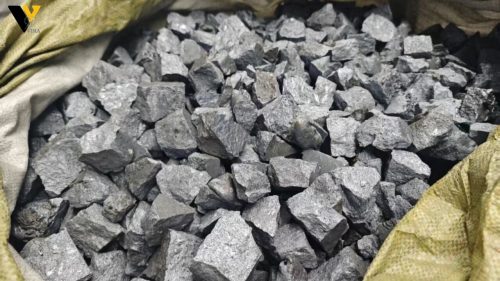
Ferrosilicon is an alloy composed primarily of iron (Fe) and silicon (Si), typically containing between 15% and 90% silicon by weight. It is produced in electric arc furnaces through the reduction of silica (SiO₂) with carbon in the presence of iron.
Unlike finished metals, ferrosilicon is not usually used on its own. Instead, it acts as a functional alloying and deoxidizing agent, especially in steelmaking and cast iron production. Its true value lies in how it improves the quality, strength, and performance of other metals.
At room temperature, ferrosilicon is solid, brittle, and metallic in appearance, usually silver-gray in color.
How Ferrosilicon Is Produced
The production of ferrosilicon is an energy-intensive process carried out in submerged electric arc furnaces. The main raw materials include:
-
Quartz or silica
-
Coke or coal (as a reducing agent)
-
Iron sources such as scrap steel
At temperatures exceeding 2,000°C, silicon is reduced from silica and combines with iron to form ferrosilicon. The molten alloy is then tapped, cooled, crushed, and classified into different sizes or powders depending on its final application.
Ferrosilicon Applications Across Industries
Ferrosilicon is valued not for its appearance, but for what it does chemically and structurally. Below are its most important applications.
Ferrosilicon in Steelmaking
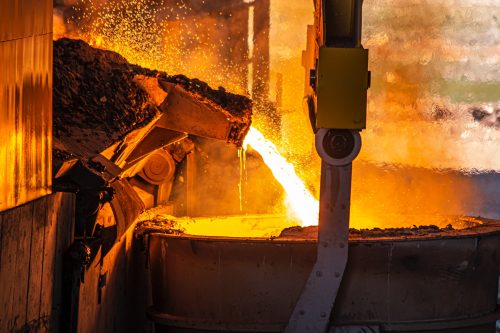
One of the most significant uses of ferrosilicon is in steel production. It is primarily used as:
-
A deoxidizer, removing oxygen from molten steel
-
An alloying agent, improving strength and elasticity
-
A grain refiner, enhancing microstructure
By reducing oxygen content, ferrosilicon prevents defects such as porosity and brittleness. This leads to cleaner steel with better mechanical properties.
Ferrosilicon in Cast Iron and Foundries
In cast iron production, ferrosilicon helps control graphite formation. This is essential for producing:
-
Gray iron
-
Ductile (nodular) iron
-
Malleable iron
Foundries rely on ferrosilicon to achieve consistent casting quality, improved machinability, and predictable mechanical behavior.
Chemical and Specialized Uses
High-purity ferrosilicon is also used in:
-
Magnesium production (via the Pidgeon process)
-
Manufacturing silicon-based chemicals
-
Heavy media separation in mining
Its chemical stability and reactivity with oxygen make it valuable beyond metallurgy.
Ferrosilicon Density and Physical Properties
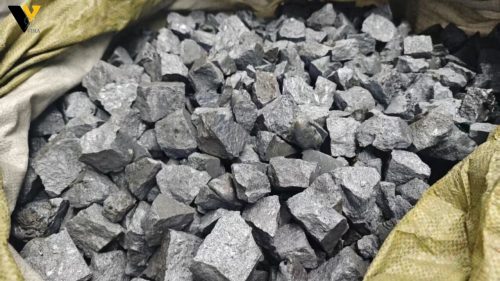
Understanding ferrosilicon’s physical characteristics is essential for storage, transport, and application.
-
Density: Approximately 6.5–7.0 g/cm³ (varies by silicon content)
-
Melting Point: Around 1200–1350°C
-
Hardness: Brittle and hard
-
Magnetic Properties: Weakly magnetic
Higher silicon content generally lowers density and increases brittleness. These properties influence how ferrosilicon is crushed, handled, and added to molten metal.
Ferrosilicon Powder: Uses and Advantages
Ferrosilicon powder is produced by grinding lumps or granules into fine particles. It is commonly used when precise dosing or fast reaction time is required.
Common Applications of Ferrosilicon Powder
-
Powder metallurgy
-
Welding electrodes
-
Chemical reactions
-
Dense media separation in mining
Because of its large surface area, ferrosilicon powder reacts faster than lumps, making it ideal for controlled processes. However, it must be handled carefully due to dust and oxidation risks.
Ferrosilicon Alloy Grades Explained
Ferrosilicon is available in several standardized grades, typically defined by silicon content:
-
FeSi 75% – Most widely used in steel and foundries
-
FeSi 65% – Common in cast iron applications
-
FeSi 45% – Used where lower silicon addition is required
Each grade serves a specific purpose depending on metallurgical requirements, cost considerations, and final product specifications.
Ferrosilicon Lumps: Practical Industrial Form
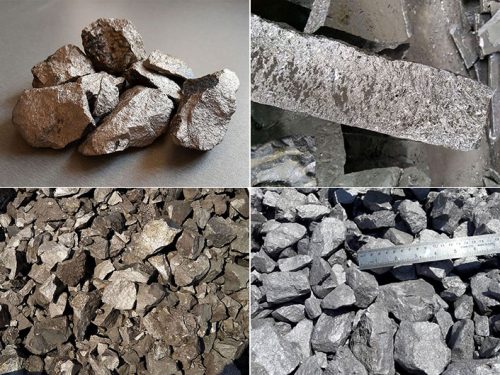
Ferrosilicon lumps are the most commonly traded form of this alloy. They are typically sized between 10–100 mm and used directly in furnaces.
Benefits of Ferrosilicon Lumps
-
Easy handling and storage
-
Controlled melting behavior
-
Reduced oxidation compared to powder
Lumps are preferred in large-scale steelmaking and foundry operations where bulk additions are required.
Ferrosilicon in Steel: Why It Matters
The role of ferrosilicon in steel cannot be overstated. Without proper deoxidation and silicon control, steel quality would suffer significantly.
Key benefits include:
-
Improved tensile strength
-
Enhanced corrosion resistance
-
Better electrical properties (especially in electrical steel)
-
Increased durability and lifespan
In specialty steels, precise silicon control using ferrosilicon is essential for meeting international standards.
Ferrosilicon Export and Global Trade
Ferrosilicon is a globally traded commodity, with major producers supplying steel industries worldwide. Export quality is typically judged by:
-
Silicon percentage
-
Impurity levels (Al, C, P, S)
-
Particle size distribution
-
Packaging and moisture control
Because ferrosilicon is sensitive to oxidation, proper export packaging—often in big bags or sealed drums—is crucial to maintain quality during transport.
Demand for ferrosilicon closely follows trends in steel production, infrastructure development, and industrial growth.
Storage and Safety Considerations
While ferrosilicon is stable under normal conditions, improper storage can lead to issues such as oxidation or, in rare cases, gas generation when exposed to moisture.
Best practices include:
-
Storing in dry, ventilated areas
-
Avoiding contact with water
-
Using proper personal protective equipment (PPE)
These precautions help maintain both product quality and workplace safety.
Environmental and Sustainability Aspects
Modern ferrosilicon production faces increasing pressure to reduce energy consumption and emissions. Advances in furnace efficiency, recycling of raw materials, and cleaner power sources are helping producers move toward more sustainable practices.
From a lifecycle perspective, ferrosilicon contributes positively by enabling stronger, longer-lasting steel products that reduce the need for frequent replacement.
Conclusion
Ferrosilicon may not be a household name, but it is an essential building block of modern industry. From steelmaking and foundries to chemical processes and global trade, its impact is wide-reaching and undeniable.
Understanding ferrosilicon—its forms, properties, and applications—helps buyers make informed decisions and allows engineers and manufacturers to optimize performance and quality. As industries continue to evolve, ferrosilicon will remain a vital alloy supporting progress behind the scenes.
FAQs
1. What is ferrosilicon mainly used for?
Ferrosilicon is mainly used as a deoxidizer and alloying agent in steelmaking and cast iron production.
2. Is ferrosilicon magnetic?
Ferrosilicon is weakly magnetic due to its iron content, but it is not strongly magnetic.
3. What is the difference between ferrosilicon powder and lumps?
Powder reacts faster and is used for precise applications, while lumps are easier to handle and preferred for bulk furnace additions.