
API Barite Supplier | Exploring Premium Barite Worldwide
June 21, 2026
Micronized Gypsum: A Complete Guide to Its Uses, Benefits, and Applications
July 15, 2026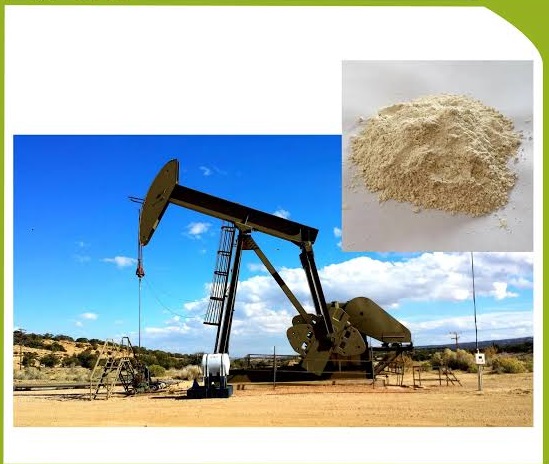
Drilling operations require materials that can improve efficiency, stabilize boreholes, and reduce operational risks. Among these materials, drilling bentonite has become one of the most widely used minerals in the oil and gas, water well, geothermal, mining, and horizontal directional drilling (HDD) industries.
Bentonite is a naturally occurring clay primarily composed of the mineral montmorillonite, known for its exceptional swelling capacity, water absorption, and rheological properties. When mixed with water, it forms a stable drilling fluid capable of suspending drill cuttings, lubricating drilling equipment, controlling formation pressure, and protecting borehole walls from collapse.
Because of these unique characteristics, drilling bentonite has become an essential component in modern drilling projects worldwide. Whether drilling a deep oil well, constructing water wells, or installing underground pipelines using trenchless technology, choosing the right bentonite can significantly improve drilling performance while reducing costs and downtime.
This guide explores everything you need to know about drilling bentonite, including its types, technical properties, applications, advantages, specifications, and how to select the right product for your project.
What Is Drilling Bentonite?
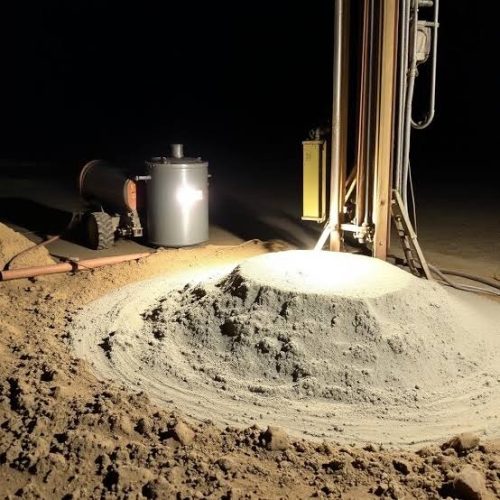
Drilling bentonite is a specially processed sodium bentonite designed to prepare drilling mud. Its primary function is to create a highly viscous fluid that circulates through the borehole during drilling operations.
Unlike ordinary clay, bentonite can absorb several times its weight in water. Once hydrated, the clay particles expand and form a gel-like suspension. This drilling fluid performs multiple critical functions simultaneously.
The primary purposes of drilling bentonite include:
- Stabilizing borehole walls
- Suspending drill cuttings
- Transporting cuttings to the surface
- Cooling and lubricating drill bits
- Reducing fluid loss into permeable formations
- Controlling downhole pressure
- Preventing borehole collapse
Without high-quality drilling fluid, drilling efficiency decreases significantly, while equipment wear and operational risks increase.
The effectiveness of drilling bentonite depends on several factors, including mineral purity, montmorillonite content, particle size distribution, swelling capacity, viscosity, and compliance with international industry standards.
zeo-life.com said:
بنتونیت حفاری، خاک رسی از جنس سیلیکات آلومینیوم است که تقریبا 67-65 درصد آن از مونت موریلونت تشکیل شده است. به طور کلی مهم ترین خاصیت بنتونیت که سبب خاص شدن کاربرد آن در صنایع گشته، جاذب بودن آن است. بنتونیت حفاری نیز با بهره مندی از این ویژگی بی نظیر و در ترکیب با آب، ترکیب ژل مانند غیرقابل نفوذی ایجاد می کند. سپس این کانی هوشمند با مسدود کردن منافذ جریان آب در ساختار خود، نقش موثری در آب بندی مکان مصرف خواهد داشت.
Types of Drilling Bentonite
Different drilling projects require different bentonite grades. Understanding these types helps engineers and contractors select the most suitable material for specific geological conditions.
Sodium Bentonite
Sodium bentonite is the most commonly used drilling bentonite due to its excellent swelling ability and high viscosity.
Advantages include:
- Excellent water absorption
- High gel strength
- Superior suspension capacity
- Low filtration loss
- Strong borehole stabilization
- Excellent lubrication properties
Sodium bentonite is widely used in:
- Oil drilling
- Gas drilling
- Water well drilling
- HDD projects
- Geothermal wells
Calcium Bentonite
Calcium bentonite has lower swelling capacity compared to sodium bentonite. While it is less suitable for demanding drilling operations, it can still be used in projects with less challenging geological conditions or after chemical activation.
Typical applications include:
- Shallow drilling
- Environmental projects
- Certain civil engineering works
Polymer-Enhanced Bentonite
Some advanced drilling fluids combine bentonite with specialized polymers to improve performance under difficult drilling conditions.
These products offer:
- Better viscosity control
- Improved filtration reduction
- Enhanced hole cleaning
- Greater resistance to contaminants
- Improved thermal stability
Polymer-enhanced bentonite is often selected for deep drilling projects where conventional drilling mud may not provide sufficient performance.
API Grade Drilling Bentonite
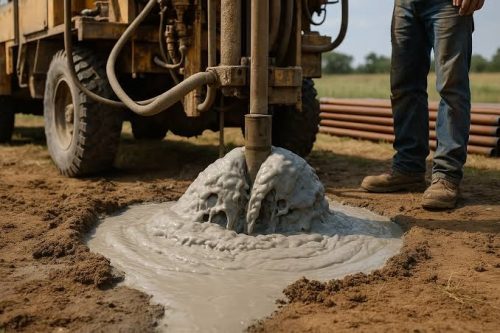
One of the most important quality indicators is compliance with API 13A, the internationally recognized specification for drilling-grade bentonite.
API-grade bentonite undergoes strict quality control to ensure consistent performance in drilling fluids.
Typical characteristics include:
- High yield
- Excellent viscosity
- Low fluid loss
- Stable rheological properties
- High montmorillonite content
- Reliable hydration performance
Using API-grade bentonite offers several operational advantages. Contractors can prepare drilling mud with predictable viscosity, ensuring better borehole stability and minimizing drilling interruptions.
For international projects, API compliance is often a key purchasing requirement because it guarantees consistent product quality across different suppliers.
Applications of Drilling Bentonite
Drilling bentonite is used in a wide range of industries because of its versatility and outstanding engineering properties.
Oil and Gas Drilling
Oil and gas exploration relies heavily on drilling fluids to maintain borehole integrity and transport rock cuttings to the surface.
In these operations, bentonite helps:
- Stabilize formations
- Prevent stuck pipe incidents
- Cool drill bits
- Improve drilling efficiency
- Reduce non-productive time
Its ability to maintain viscosity under varying downhole conditions makes it indispensable in conventional drilling systems.
Water Well Drilling
Water well contractors use drilling bentonite to stabilize unconsolidated soil formations during drilling.
Benefits include:
- Cleaner boreholes
- Improved drilling speed
- Reduced collapse risk
- Better casing installation
- Easier well development
High-quality bentonite also minimizes formation damage, helping maintain optimal groundwater flow after the well is completed.
Horizontal Directional Drilling (HDD)
Horizontal Directional Drilling has become increasingly popular for installing pipelines, telecommunications cables, electrical conduits, and fiber optic networks without extensive excavation.
In HDD operations, bentonite drilling fluid provides:
- Borehole lubrication
- Reduced pullback friction
- Efficient spoil removal
- Hole stability
- Improved drilling accuracy
These benefits significantly reduce project time and equipment wear, especially in long-distance installations.
Mining Exploration
Mining companies use drilling bentonite during mineral exploration drilling to improve sample recovery and maintain borehole stability.
Stable drilling conditions enable geologists to collect more accurate core samples while minimizing drilling interruptions.
Advantages of Drilling Bentonite
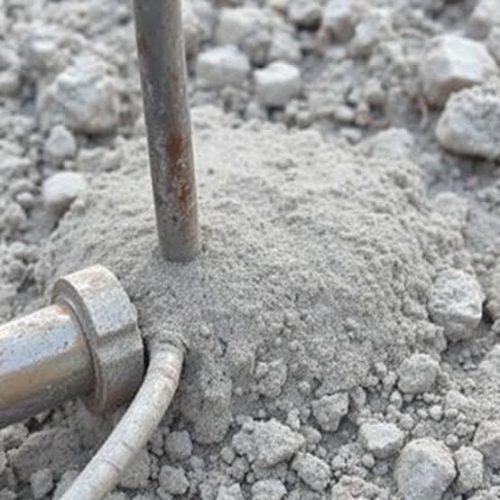
Selecting high-quality drilling bentonite offers significant operational, technical, and economic benefits. Whether the project involves oil and gas exploration, water well construction, mining, or horizontal directional drilling, bentonite plays a vital role in improving drilling efficiency and reducing project risks.
Below are the key advantages of using premium drilling bentonite.
Excellent Borehole Stability
One of the primary functions of drilling bentonite is to stabilize the borehole walls throughout the drilling process.
As the bentonite slurry circulates inside the borehole, it creates a thin, low-permeability filter cake on the formation surface. This protective layer minimizes fluid invasion into surrounding formations while helping maintain the integrity of the borehole.
Stable boreholes reduce the risk of:
- Hole collapse
- Caving formations
- Lost circulation
- Stuck drill strings
- Costly drilling delays
This stability becomes particularly important when drilling through loose sand, gravel, fractured rock, or unconsolidated formations.
Superior Suspension Capacity
Drilling generates large amounts of rock cuttings that must be continuously transported to the surface.
Thanks to its high viscosity and gel strength, drilling bentonite effectively suspends drill cuttings, even when circulation temporarily stops.
Efficient cuttings transport helps:
- Prevent blockages
- Reduce equipment wear
- Improve drilling speed
- Enhance overall drilling efficiency
Without proper suspension properties, cuttings may settle at the bottom of the borehole, leading to operational problems and increased drilling costs.
Excellent Lubrication
Friction between drilling equipment and the borehole can significantly affect drilling performance.
Bentonite-based drilling fluids create a lubricating layer that reduces torque and drag on drilling tools.
The benefits include:
- Lower equipment wear
- Reduced energy consumption
- Longer drill bit life
- Easier pipe movement
- Improved drilling accuracy
These advantages become especially valuable in long horizontal drilling operations where friction is naturally higher.
Effective Fluid Loss Control
During drilling, excessive fluid loss into permeable formations can negatively impact drilling performance.
High-quality drilling bentonite forms a thin yet durable filter cake that minimizes fluid invasion while maintaining circulation efficiency.
Improved fluid loss control helps:
- Preserve drilling fluid volume
- Protect productive formations
- Reduce mud treatment costs
- Improve borehole integrity
This property is particularly important in highly permeable geological formations.
Environmental Compatibility
Bentonite is a naturally occurring clay mineral that is generally considered environmentally friendly when sourced and used responsibly.
Compared to many synthetic drilling additives, bentonite offers several environmental advantages:
- Naturally occurring material
- Low toxicity
- Biodegradable under appropriate conditions
- Minimal environmental impact
- Easier drilling fluid disposal in accordance with local regulations
As environmental standards become stricter worldwide, many drilling contractors continue to prefer bentonite-based drilling fluids because of their sustainability profile.
Technical Specifications of Drilling Bentonite
Although specifications vary depending on the manufacturer and drilling application, high-quality drilling bentonite typically meets internationally recognized performance requirements.
The following table summarizes the most important technical characteristics.
| Property | Typical Value |
|---|---|
| Appearance | Light cream to gray powder |
| Main Mineral | Sodium Montmorillonite |
| Moisture Content | Max. 12% |
| pH (5% Suspension) | 9–10.5 |
| Swelling Capacity | High |
| Yield | High |
| Specific Gravity | Approximately 2.4 |
| Mesh Size | 200 Mesh (Typical) |
| Viscosity | According to API Standard |
| Fluid Loss | Low |
| Sand Content | Very Low |
| Compliance | API 13A (for API-grade products) |
It is important to note that actual values may vary depending on the product grade and intended application. Reputable manufacturers provide technical data sheets (TDS) and certificates of analysis (COA) for every production batch, allowing buyers to verify quality before use.
How to Choose High-Quality Drilling Bentonite
Not all bentonite products offer the same level of performance. Selecting the right product requires careful evaluation of several technical and commercial factors.
1. Check API Compliance
For oil, gas, and demanding drilling projects, selecting an API 13A-compliant bentonite is highly recommended.
API certification demonstrates that the product has been manufactured and tested according to internationally accepted standards, providing greater confidence in its consistency and performance.
2. Evaluate Montmorillonite Content
Montmorillonite is the active clay mineral responsible for bentonite’s swelling, viscosity, and suspension properties.
Generally, a higher montmorillonite content results in:
- Better hydration
- Improved gel strength
- Higher viscosity
- Greater drilling efficiency
Products with a higher percentage of sodium montmorillonite typically deliver superior performance in challenging drilling conditions.
3. Review Laboratory Test Reports
Reliable suppliers should be able to provide detailed laboratory reports covering key quality parameters, including:
- Viscosity
- Fluid loss
- Moisture content
- Swelling index
- Particle size distribution
- Yield performance
Reviewing these reports helps ensure the product meets the technical requirements of your project.
4. Consider Geological Conditions
Different formations require different drilling fluid characteristics.
For example:
- Loose sandy formations may require higher viscosity for improved stability.
- Deep wells often demand enhanced thermal stability.
- HDD projects benefit from excellent lubrication and low filtration loss.
- Water well drilling typically requires efficient cuttings transport and borehole support.
Choosing a bentonite grade tailored to the project’s geological conditions can significantly improve drilling performance.
5. Select a Reliable Supplier
Product quality depends not only on the raw material but also on mining practices, processing technology, and quality control procedures.
A trustworthy supplier should offer:
- Consistent product quality
- Reliable technical support
- Batch traceability
- Timely delivery
- International export experience
- Comprehensive documentation
Building a long-term relationship with a reputable manufacturer can help reduce operational risks and ensure a stable supply for future projects.
Packaging & Export
Drilling bentonite is supplied in various packaging options to meet the needs of domestic and international customers.
Common packaging includes:
- 25 kg laminated bags
- 40 kg industrial bags
- 50 kg polypropylene bags
- 1-ton jumbo bags (FIBC)
- Bulk shipments for large-scale projects
To maintain product quality during transportation and storage, bentonite should be kept in a dry, covered environment, protected from moisture and contamination.
Many manufacturers export drilling bentonite worldwide using standard sea freight containers. Proper packaging, labeling, and documentation help ensure compliance with international shipping regulations and facilitate smooth customs clearance.
When purchasing bentonite for export projects, buyers should also request essential documents such as:
- Commercial Invoice
- Packing List
- Certificate of Origin
- Certificate of Analysis (COA)
- Technical Data Sheet (TDS)
- Material Safety Data Sheet (MSDS), when required
These documents support quality assurance and simplify international trade procedures.
Conclusion
Drilling bentonite is one of the most important materials used in modern drilling operations. Its exceptional swelling capacity, viscosity, filtration control, and borehole stabilization properties make it an indispensable component of drilling fluids across various industries.
Whether the project involves oil and gas exploration, water well drilling, geothermal energy, mining, or horizontal directional drilling (HDD), selecting a high-quality bentonite can significantly improve drilling performance while reducing operational costs and minimizing project risks.
When choosing drilling bentonite, buyers should evaluate more than just the price. Product consistency, compliance with international standards such as API 13A, high montmorillonite content, reliable laboratory testing, and the manufacturer’s technical expertise are all critical factors that influence long-term performance.
Partnering with an experienced supplier ensures not only a consistent product but also technical support, dependable logistics, and confidence in every shipment. As drilling technologies continue to evolve and environmental expectations become more demanding, premium drilling bentonite will remain a trusted solution for achieving safer, cleaner, and more efficient drilling operations.
FAQs
1. What is drilling bentonite used for?
Drilling bentonite is primarily used to prepare drilling mud for oil and gas wells, water wells, geothermal drilling, mining exploration, and horizontal directional drilling (HDD). It helps stabilize the borehole, transport drill cuttings, reduce friction, and control fluid loss.
2. What is the difference between drilling bentonite and ordinary bentonite?
Drilling bentonite is specially processed to deliver high swelling capacity, superior viscosity, and excellent suspension properties. Ordinary bentonite may not meet the performance requirements or quality standards needed for drilling applications.
3. Why is sodium bentonite preferred for drilling?
Sodium bentonite has a higher montmorillonite content and greater swelling capacity than calcium bentonite. These characteristics provide better viscosity, stronger gel formation, improved borehole stability, and more effective cuttings transport.
6 Comments
Can drilling bentonite be used for water well drilling?
Hello
Yes. Drilling bentonite is widely used in water well drilling because it stabilizes the borehole, transports drill cuttings to the surface, and protects underground water formations during drilling.
What is the difference between drilling bentonite and regular bentonite?
Hello
Drilling bentonite is specially processed and tested to meet industry standards for viscosity, filtration control, and suspension performance. Regular bentonite may not provide the same level of efficiency or meet the technical requirements of drilling operations.
How is drilling bentonite mixed with water?
Hello
Drilling bentonite should be added gradually to clean water while continuously mixing with a high-speed mixer. Proper hydration usually takes 20 to 30 minutes, depending on the product and water quality, to achieve optimal viscosity and performance.